Mapping Sequential Incentive Claims to Progressive Loyalty Achievements in Digital Wagering Platforms
Written by Noah Bauer · Jul 19, 2026

Mapping Sequential Incentive Claims to Progressive Loyalty Achievements in Digital Wagering Platforms
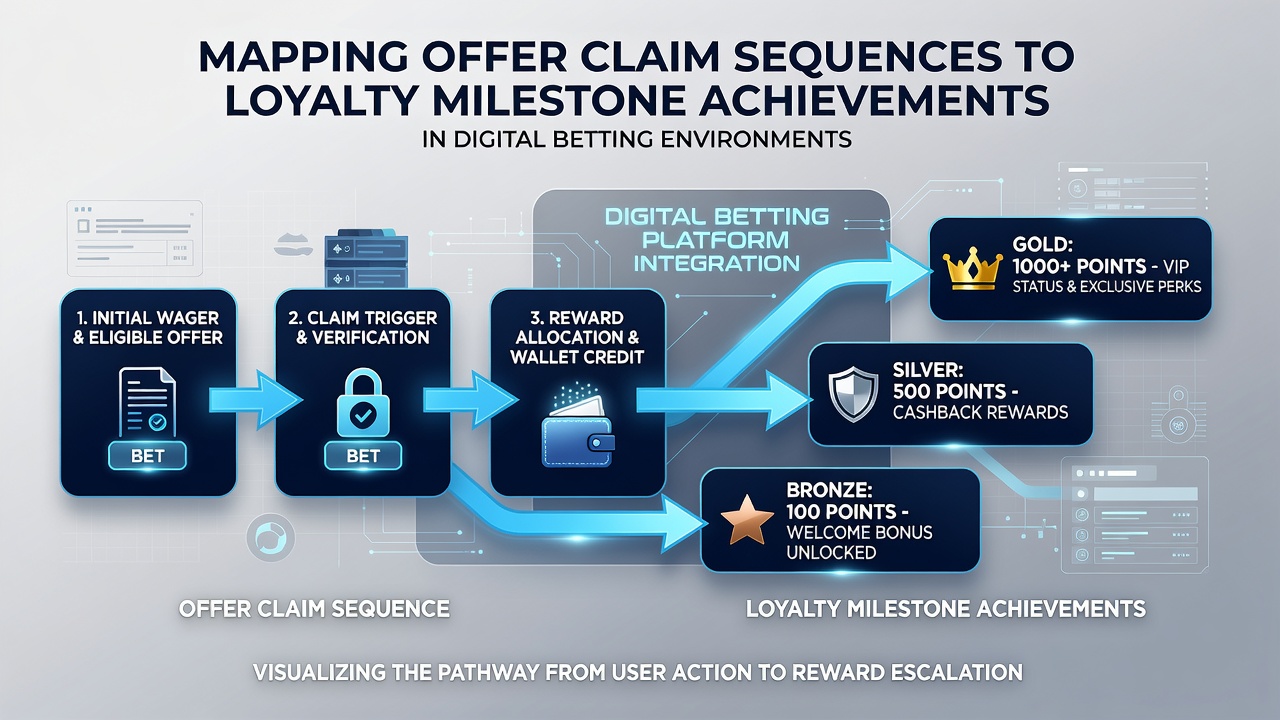
Digital betting platforms organize promotional incentives through ordered claim sequences that connect directly to loyalty milestone systems, where each redemption step contributes measurable progress toward tier advancements. Operators design these sequences so initial welcome offers, reload bonuses, and free bet triggers accumulate points or credits that unlock higher status levels, and this structure operates across multiple jurisdictions as of July 2026.
Claim sequences typically begin with account registration and first deposit actions that trigger matched bonuses, after which users proceed to subsequent offers such as cashback on losses or event-specific free bets. Each completed claim registers activity data that loyalty algorithms convert into milestone credits, allowing platforms to track cumulative engagement without requiring separate loyalty program enrollment in many cases. Researchers at institutions studying online gambling behavior have documented how these sequences create predictable pathways, with data from European operators showing average progression from entry-level to mid-tier status occurring after three to five sequential claims within a 30-day window.
Core Mechanics of Sequence Mapping
Platforms map offer claims to milestones through backend rules that assign weighted values to different promotion types, where deposit matches often carry higher point multipliers than no-deposit free bets. Users who follow a standard sequence of welcome offer followed by weekly reloads and then casino game bonuses reach bronze or silver milestones faster than those claiming isolated offers, because the system recognizes pattern completion as sustained participation. Observers note that this mapping relies on timestamped logs and user identifiers to prevent duplicate counting while still rewarding consistent activity across sportsbook and casino verticals.
Additional layers appear when platforms integrate VIP pathways that require specific claim volumes alongside wagering volume thresholds. For instance, one documented configuration in North American markets requires four reload claims plus a minimum deposit total before silver milestone activation, after which cashback rates increase and dedicated account managers become available. Data from regulatory filings indicate that such structured sequences help operators retain users longer, with loyalty milestone completion rates rising notably during major sporting events in the first half of 2026.
Regional Implementation Patterns
Operators in Australia apply similar mapping under oversight from the Australian Communications and Media Authority, where claim sequences must align with responsible gambling codes that limit bonus stacking. In these environments, milestones often tie to self-exclusion tools and spending caps that activate automatically once users reach certain claim counts. European platforms governed by bodies such as the Malta Gaming Authority follow comparable logic but place greater emphasis on transparent point calculation disclosures within user dashboards.
North American systems, particularly those licensed in New Jersey and Pennsylvania, emphasize integration between mobile app claim flows and desktop loyalty portals. A user who claims a sportsbook free bet on a Monday and follows with a midweek casino reload can see milestone progress reflected in real time, whereas fragmented claims across different verticals may require manual consolidation requests. Reports compiled by the European Gaming and Betting Association highlight how these cross-platform mappings reduce friction for frequent participants while maintaining audit trails for compliance reviews.
Tracking and Analytics Integration
Advanced platforms employ analytics engines that monitor sequence completion rates and correlate them with milestone achievement timelines. When users complete a predetermined number of claims within defined intervals, the system automatically advances their status and notifies them of new reward tiers. This automation reduces manual oversight while generating datasets that operators use to refine future promotion calendars. Those who have examined aggregated platform data find that sequences incorporating both sportsbook and casino offers produce higher milestone conversion than single-vertical sequences alone.
Seasonal adjustments appear in July 2026 around major tournaments, where platforms temporarily increase point values for certain claim types to accelerate milestone progress during high-traffic periods. Such adjustments remain subject to local regulatory caps on bonus frequency, ensuring the mapping process stays within operational limits set by licensing authorities. Industry reports show these timed accelerations contribute to measurable upticks in loyalty tier upgrades without altering the underlying sequence architecture.
Technical Considerations for Operators
Backend systems must handle concurrent claim processing across thousands of users while maintaining accurate milestone counters. Developers implement queue management and validation checks that verify eligibility before crediting progress, which prevents over-issuance when users attempt rapid successive claims. Security protocols log each step in the sequence to support dispute resolution and regulatory audits, with many platforms now incorporating blockchain-based timestamping for added transparency in loyalty calculations.
Future iterations under discussion include predictive mapping features that suggest optimal claim orders based on a user's historical activity, although such features require explicit user consent under emerging data protection standards. Observers tracking platform updates note steady investment in these capabilities as operators seek to differentiate their loyalty ecosystems in competitive markets.
Conclusion
The mapping of offer claim sequences to loyalty milestone achievements forms a core operational framework in digital betting environments, linking promotional activity directly to tier progression across multiple regulatory landscapes. As platforms continue refining these connections through data analytics and seasonal adjustments, the underlying mechanics remain centered on sequential validation, point weighting, and compliance alignment. Continued monitoring by industry associations and government agencies will shape how these systems evolve beyond July 2026 while preserving the factual structure that governs user advancement today.